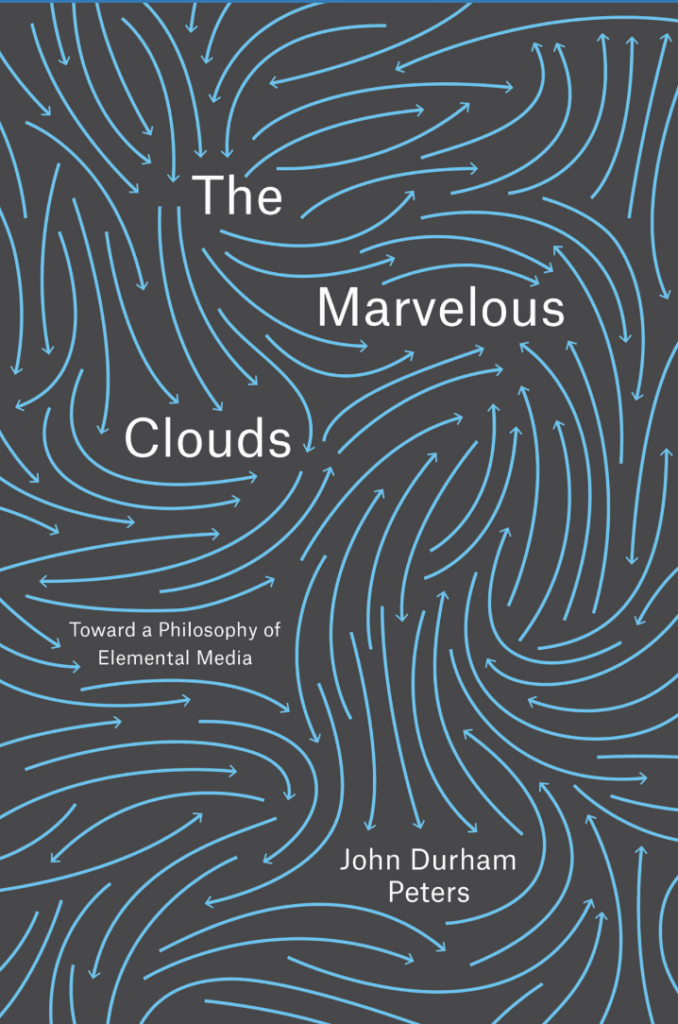
“Writing is unquestionably the most momentous of all technical innovations in human history. In contrast to spoken language, which seems ‘hardwired’ into the human equipment, writing is a software package that requires installation and constant updates.”
— John Durham Peters, The Marvelous Clouds (University of Chicago Press)
When Peters calls writing a “software package,” I couldn’t help but laugh. Maybe that’s the comedian in me, but it’s such a fitting metaphor. Unlike speech, which humans just slide into naturally, writing takes years of practice, constant corrections, and a whole infrastructure of teachers, books, and tools. Even then, it still glitches since your “update” is never really finished. As someone who spends way too much time jotting down half-formed jokes in her notes app or scribbling ideas for recipes that I’ll probably never cook, I relate to the sense that writing is this ongoing installation that never fully stabilizes.
But once installed, it’s transformative. Peters is right to call it momentous. Speech connects us in real time, but writing lets us carry ideas across time and space. Without it, our collective memory would last only as long as someone could retell the story. I think about this a lot as someone who studied sociology and philosophy. Writing is the very thing that makes concepts portable, letting us pass them from one generation to the next. It’s why I can sit in my New York apartment with my cats, and read Plato, or a news headline.
Writing doesn’t just record speech, but transforms it. That permanence can be comforting. Wisdom, recipes, laws, or even comedy sketches can outlast us. But words can come back to haunt us, whether it’s a tweet you regret or a law carved into stone. As a comic-in-training, I know the joy of a joke landing in the moment, but if someone writes it down, it becomes fixed, judged, and preserved in a way that oral storytelling never was.
Peters’ metaphor also reminds me of “cognitive offloading.” Writing is how we unload thoughts so we don’t have to carry them all around. My grocery list saves me from forgetting the milk. My notes app preserves comedy ideas that strike at 3 a.m. Writing keeps track of the little things so our minds can focus elsewhere. In that way, it’s as practical as it is profound.
What I admire most in Peters’ claim is how it reframes writing as extraordinary. It’s easy to forget that something I use daily. Whether I’m journaling, drafting material, or even copying down a recipe, it is the very same thing that structures law, religion, and science. Writing is the foundation of so much human possibility.
That said, I wouldn’t go so far as to crown it the most momentous invention. Storytelling, art, performance, and laughter are just as crucial. Some truths land better in a room full of people laughing together than in a perfectly worded essay. I believe in the power of comedy to bring people relief in the middle of chaos, and while writing helps preserve that power, it’s not the only medium that matters.
Still, Peters’ metaphor resonates with me. Writing is like that one app you can’t delete from your phone. It’s imperfect and demanding, but the whole system of culture depends on it. Just like any evolving software, it keeps updating. For me, the best part is that it leaves room for humor, for recipes, for philosophy, and even for the plans of someone trying to figure out how to run a comedy club restaurant someday. Writing, in all its forms, is the platform that keeps those dreams alive.